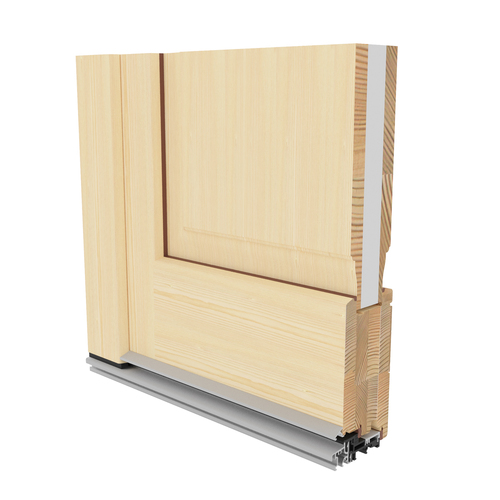
D92 Premium External Wooden doors - 92 mm Profile for Passive House and RC3
· Ud 0.73 W/m²K - Thermal insulation · 32-46 dB - Acoustic insulation · RC2/RC3 - Security available Request Quote for D92 Technical data and DWG - on request ->
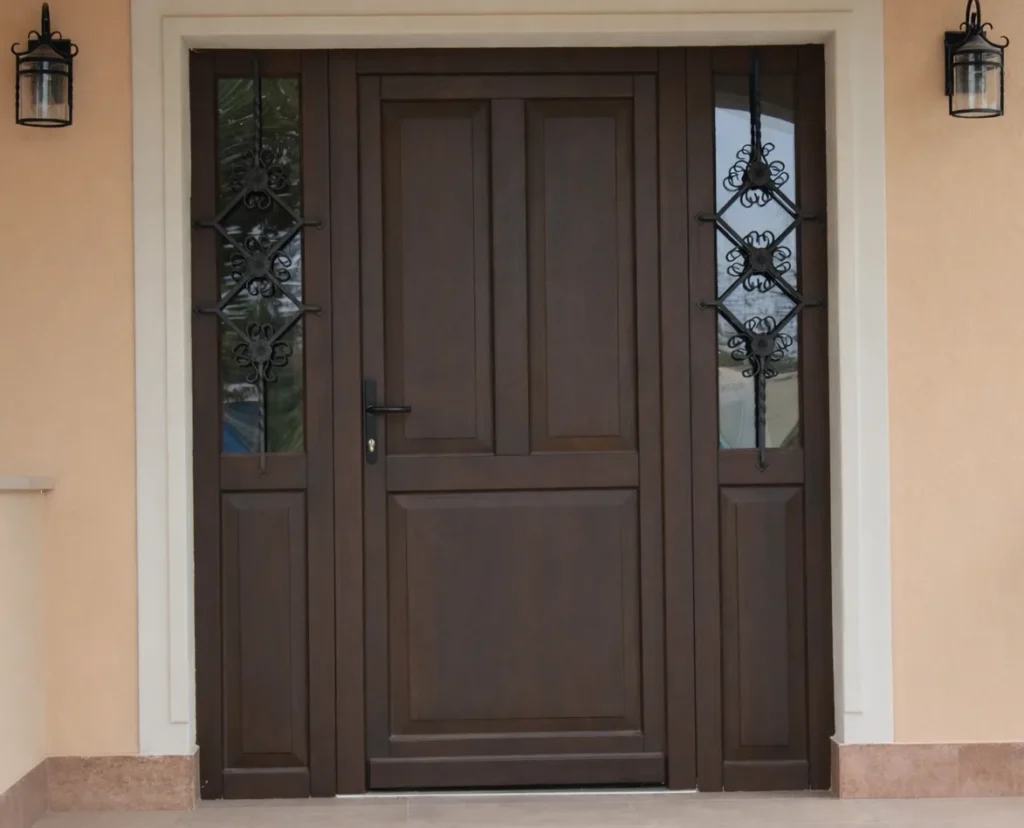
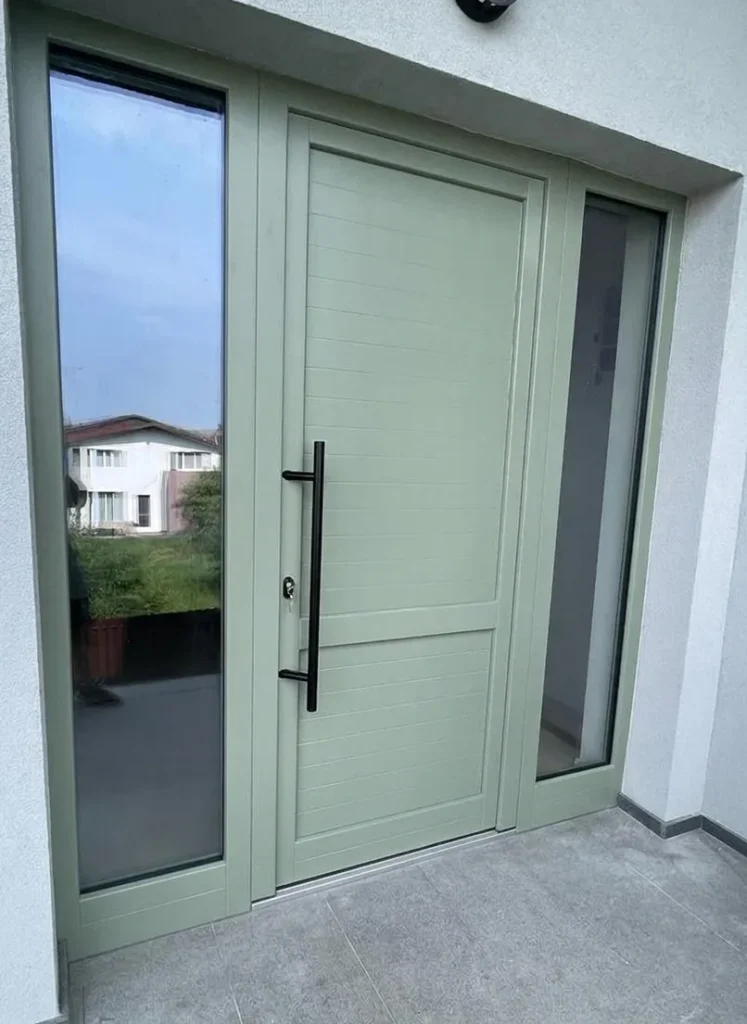
U-value 0.73 W/m²K
Thermal Insulation
32-46 dB
Acoustic insulation
RC2/RC3
Security available
Application and specifications
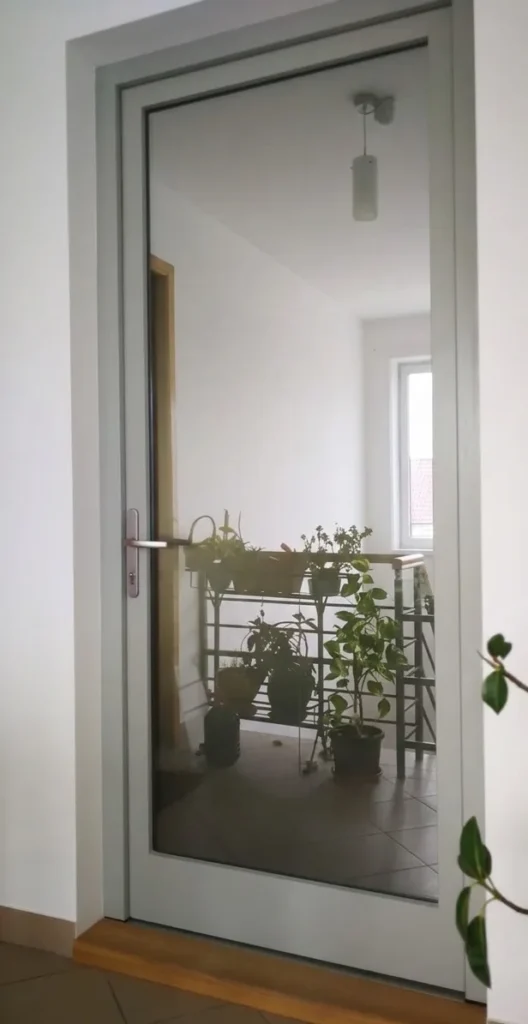
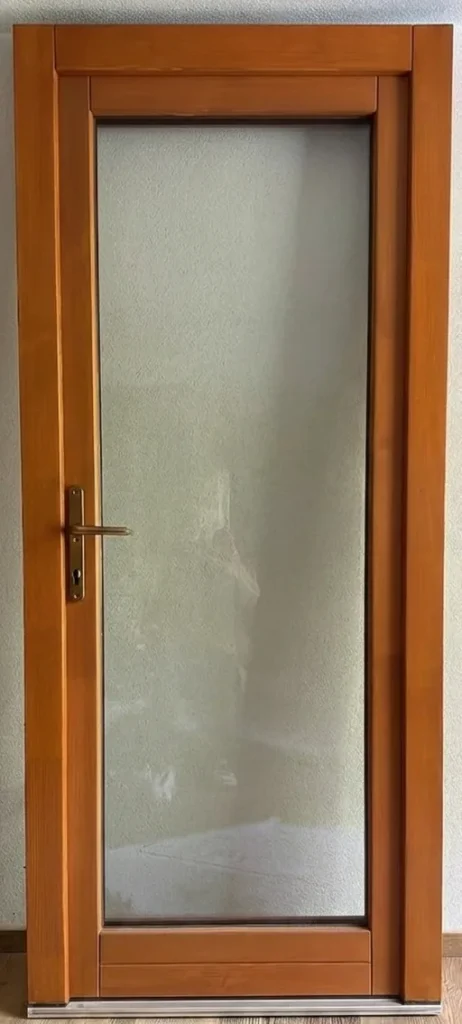
The 92mm laminated wood external doors - D92 series - have the lowest thermal coefficient in the SM WOOD range: Ud 0.73 W/m²K and are the only series that can be equipped with RC3 security. 92 mm profile made of four-layer laminated wood, Ug 0.5 W/m²K triple glazing, 3 perimetric Q-lon gaskets, and a Gutmann threshold with a thermal break. Usage: projects requiring Ud <= 0.80 W/m²K, projects requiring RC2 or RC3 security levels, premium properties where building envelope performance is a design criterion.
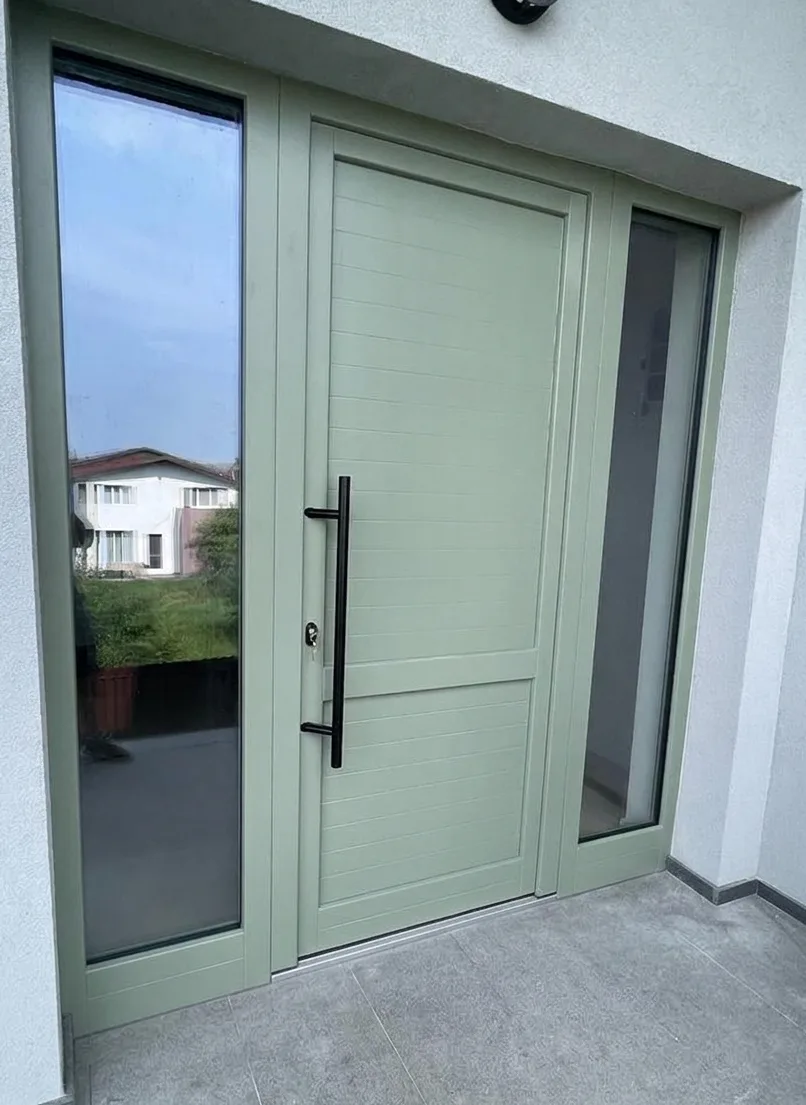
Intended Use and Specifications
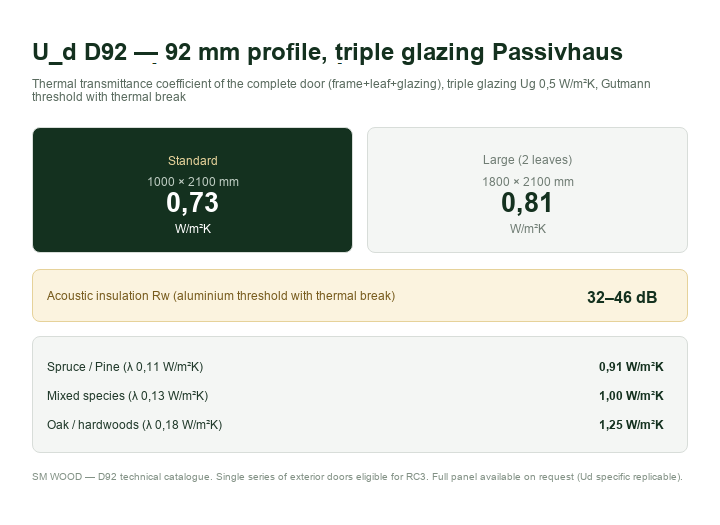
D92 is the premium door for security and maximum insulation, and the only RC3 series. 92 mm profile, 92×85 mm frame / 92×107 mm leaf. Standard Ud is 0.73 W/m²K (33% glazing/panel) at 1000×2100 mm, with Ug 0.5 and a Gutmann threshold with thermal break.
3 Q-Lon gaskets, acoustic insulation 32–46 dB. Roto DoorSafe + Baka hardware, RC1/RC2/RC3. Supports Accoya and other available species.
Use: villas, exposed locations, increased security requirements or Passivhaus projects. Higher thermal performance and airtightness than D78.
Technical Specifications D92
| Parameter | Value |
|---|---|
| Frame profile | 92 x 83 mm, 4-layer laminated wood |
| Sash profile | 92 × 107 mm |
| Material | Spruce, pine, meranti, oak, Accoya |
| Ud — triple glazing Ug 0.5 W/m²K (standard configuration) | 0.73 W/m²K |
| Insulated solid panel | available on request |
| Glazing | 4 / 18 Ar / 4 / 18 Ar / 4 Low-E — Ug = 0.5 W/m²K |
| Insulated solid panel | 12 mm spruce + 30 mm polystyrene + 10 mm spruce = 52 mm, Up = 0.85 W/m²K |
| Acoustic insulation | 32-46 dB |
| Gaskets | 3 perimetric Q-lon gaskets + thermal gap |
| Standard hardware | Roto DoorSafe 5-point + Simonswerk Baka hinges |
| Optional security | RC2 or RC3 (hardware + security glass corresponding to the class) |
| Standard threshold | Gutmann aluminium with thermal break |
| Finish | Any RAL / NCS colour or Remmers translucent stains |
| Handles | Hoppe — white, brown, silver, bronze, or gold |
| Standard size | 1000 × 2100 mm |
| Double-sash size | 1800 × 2100 mm |
Ud 0.73 W/m²K is achieved by combining the 92 mm profile with Ug 0.5 triple glazing and the 3 Q-lon gaskets. The Gutmann aluminium threshold with a thermal break is an integral part of the assembly's performance - a wooden threshold on a door with Ud 0.73 introduces a measurable thermal bridge at floor level. Complex thermal calculations (PHPP, full-assembly Uw/Ug, thermal bridges) can be performed in-house by our master engineer. Technical data for documentation and DWG files are provided on request.
When D92 is the right choice
- Standard nZEB residential project: D78 with Ud 0.90 W/m²K fits comfortably within nZEB requirements. D92 is relevant when the designer specifies Ud below 0.80 or when the project aims for Passivhaus standard - not otherwise. - Lightweight load-bearing structures: the weight of a D92 leaf with thick triple glazing requires appropriately sized frames and masonry. Partition walls without reinforcement are not suitable. - Optimized budget: D92 is the top of the range. Without a documented technical requirement (PHPP, designer specification), the extra cost compared to D78 is not justified. - Short lead time: 8-12 weeks production. Confirm availability before including the series in the estimate.
D78 covers the standard nZEB requirement (Ud 0.90 W/m²K). If the project does not require Passivhaus-level performance or RC3 security, D78 is the right choice - free technical consultancy available to determine the right variant.
- Requirement for Ud below 0.80 W/m²K - D92 at Ud 0.73 covers projects with performance superior to nZEB; technical data on request - RC3 Security - D92 can be equipped with hardware and security glass for RC3 level security on request; the D78 series reaches a maximum of RC2 - Building Envelope Consistency - premium projects where door Ud is part of the insulation strategy for the entire building
D92 exceeds nZEB recommendations by 19% compared to the Ud 0.90 W/m²K of the D78 series and is the only door in the SM WOOD range ready for RC3 security.
It is technically justified in:
D78 meets the standard nZEB requirement (Ud 0.90 W/m²K)
. If the project involves no Passivhaus certification or RC3 requirement, D78 is the compliant choice, with free technical consultation to determine the right variant.
Accoya - Installed Once, Lasts a Lifetime
SM WOOD Guarantee: 5 years on all products, including D92 in Accoya. ---
Thermal conductivity approx. 0.11 W/m·K - similar to spruce, better than dense species. The refinishing interval is longer than for any other species in the range; in the long term, maintenance costs are lower.
Accoya absorbs far less water than untreated wood - the frame and leaf remain within tolerances throughout their lifespan, without seasonal warping. Rot resistance: Class 1 natural durability, without biocides or chemical treatments.
Compared to natural wood, the concrete difference:
The D92 series is available in Accoya - the acetylated wood with maximum performance for external use.
Concrete advantages over natural wood:
SM WOOD warranty on all products: 5 years
Hardware and Security RC2 / RC3
D92 is the only external door series in the SM WOOD range prepared for RC3 security configurations.
For RC2 or RC3: hardware corresponding to the class + laminated security glass (Saint-Gobain or Guardian) - on request, specified in the quote. The burglar resistance level depends on the combination of hardware, glass, wood species, dimensions, and installation.
Standard equipment: Roto DoorSafe with 5 perimetric locking points + Simonswerk Baka hinges (up to 160 kg). For heavy or oversized doors we fit Simonswerk VARIANT VX concealed hinges, rated up to 400 kg.
Comparison D68 / D78 / D92
|
D68 |
D78 |
D92 |
|
|
Profile |
68 mm |
78 mm |
92 mm |
|
U-value |
1.28 W/m²K |
0.90 W/m²K |
0.73 W/m²K |
|
Seals |
2 |
3 Q-lon |
3 Q-lon + thermal break |
|
Threshold |
wood |
Gutmann aluminium |
Gutmann aluminium with thermal break |
|
Acoustic |
30-36 dB |
32-42 dB |
32-46 dB |
|
Security |
standard |
RC2 |
RC2 / RC3 |
|
Accoya |
- |
- |
available |
|
Ideal for |
renovation |
standard |
premium / passive |
Available Wood Species for the D92 Series
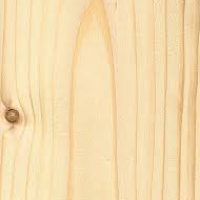
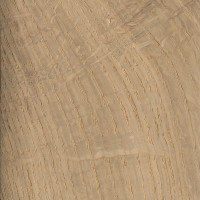
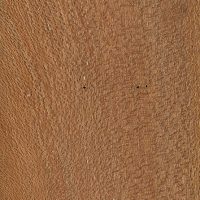
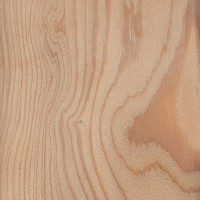
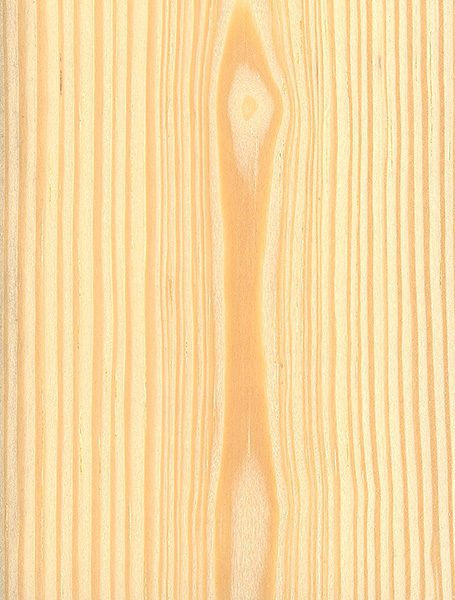
- Spruce - optimal thermal conductivity, ideal for RAL opaque finishes - Pine - properties similar to spruce, more pronounced grain - Meranti - tropical, dimensionally stable, natural resistance to moisture - Oak - chosen for external oak wooden doors with translucent lacquer, noble grain; higher Ud compared to spruce - Larch - natural hardness, stability under extreme thermal variations, recommended for mountain altitudes. Made to order. - Douglas Fir - approx. 0.13 W/m·K similar to pine, reddish-brown fibre with fine grain, works well with translucent lacquer. Made to order with extended lead time. - Ash - ~0.16 W/m·K, straight creamy-white grain, Janka hardness 6,580 N. Made to order with extended lead time. - Accoya - acetylated, maximum dimensional stability, Class 1 rot resistance. Made to order with longer lead time.
Species with the shortest lead time: spruce or pine.
Custom Configuration
Request Quote for D92 -> Technical consultancy - architects and designers
Price varies depending on species, configuration, and hardware - request a free quote.
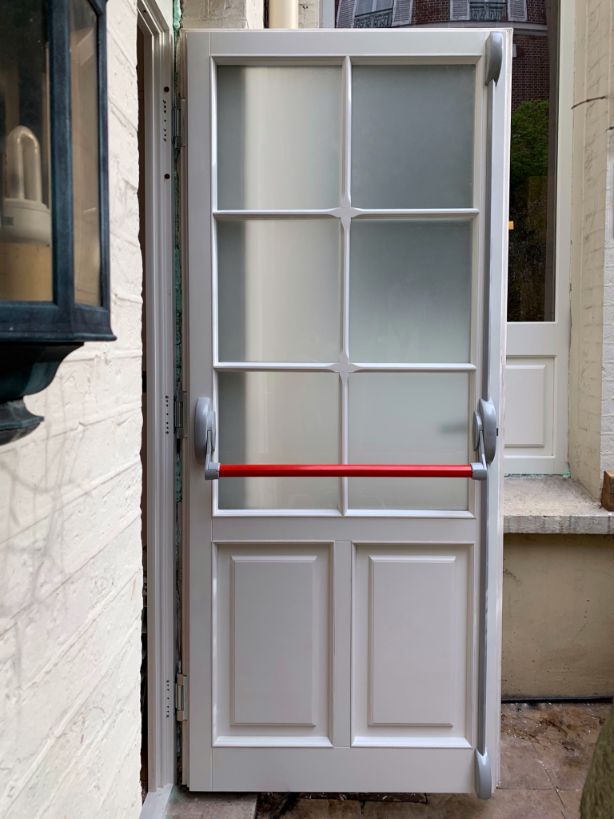
Options available: - Any size, including extra-wide or tall formats - Single or double leaf (up to 1800 mm width) - Triple glazing, insulated solid panel, or mixed configuration - Any RAL or NCS colour, including dual internal/external painting - On request, Induline eco system with A+ Eurofins impregnant (VOC below 20 g/l) and topcoat below 130 g/l — for projects with green certification requirements. - RC2 or RC3 security on request - Gutmann aluminium threshold with thermal break (standard) or solid oak threshold (on request - higher final Ud)
Available options:
When it is NOT the right choice
- Standard nZEB residential project: D78 with Ud 0.90 W/m²K fits comfortably within nZEB requirements. D92 is relevant when the designer specifies Ud below 0.80 or when the project aims for Passivhaus standard - not otherwise.
- Lightweight load-bearing structures: the weight of a D92 leaf with thick triple glazing requires appropriately sized frames and masonry. Partition walls without reinforcement are not suitable.
- Optimized budget: D92 is the top of the range. Without a documented technical requirement (PHPP, designer specification), the extra cost compared to D78 is not justified.
- Short lead time: 8-12 weeks production. Confirm availability before including the series in the estimate.