Oak Wooden windows – Class 2 Durability and Noble Appearance
European oak (Quercus robur) has the best natural durability of any European species in our range and the most expressive appearance under translucent stains. It is also one of the heavier species at 675 kg/m³, one of the harder at 4,980 N Janka, and has a higher thermal coefficient at λ 0.18 W/m·K compared to the standard European species in our range. These three facts define when oak is the right choice – and when it is not.
Density 675 kg/m³
One of the heaviest standard species
Janka 4,980 N
One of the hardest standard woods
Durability Class 2
Best European durability
Performance in Windows
Oak offers a unique combination of mechanical strength, natural beauty, and genuine durability.
1
Thermal
λ 0.18 W/m·K is the highest in our standard range, so the oak frame Uf is higher than spruce (0.11 W/m·K) or meranti (0.13 W/m·K). nZEB compliance is achievable, though at the upper limit. Exact Uf and Uw values are supplied on request for PHPP.
2
Hardness
Janka 4 980 N means oak covers high-traffic thresholds, internal sills and heavy-use doors without visible marking. After years of use, the difference from spruce (1,680 N) or meranti (2,460 N) is unmistakable.
3
Finish
Under translucent stains, oak’s coarse grain, medullary rays and olive-brown tones are unmatched in our range. An opaque RAL finish hides the grain completely, so choosing oak for an opaque finish is a purely technical decision driven by hardness and durability.
Long‑term Performance
Oak’s Class 2 durability and high tannin content call for straightforward, well-understood care.
Natural Durability
Class 2 means untreated oak lasts longer than softwoods. A finish is still recommended, but the safety margin for delayed maintenance is significantly better than spruce or pine.
Tannin Management
The Remmers finish in 4+ layers blocks oak tannin. Our hardware is stainless steel or anti‑corrosive. The only precaution: installers must use stainless or galvanised screws in any raw wood left exposed after cutting.
Maintenance
10‑year cycle with light cleaning and re‑coating. The Remmers finish is formulated to work with tannin‑rich hardwoods. Oak is durability Class 2, and a maintained finish extends that considerably.
Lamination in 3+ layers neutralises the natural tendency of oak to warp. A well‑finished laminated oak profile is dimensionally stable and behaves predictably alongside other laminated species.
Advantages of Oak
Advantages
Disadvantages
Comparison with Other Essences
How European Oak compares to the key alternatives in our joinery range.
Oak vs Spruce
Spruce wins on thermal performance (λ 0.11 against 0.18) and on cost. Oak wins on hardness (4 980 against 1 680 N), durability (Class 2 against 4) and appearance. For opaque nZEB projects, spruce is the logical choice; for a visible-grain, high-traffic solution, oak is unmatched.
Oak vs Meranti
Meranti is thermally better (λ 0.13). Oak wins on hardness, durability, and grain character. Dark Red Meranti can approach oak visually, but the European grain and solidity of oak remain a different tier for traditional projects.
Oak vs Scots Pine
Scots pine is thermally far superior (λ 0.13) and cheaper. Oak wins on hardness, durability, and visual presence. For an opaque‑finished window where thermal budget matters, pine is better. For a statement entrance door, oak is the answer.
Appearance and Colour
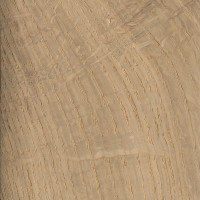
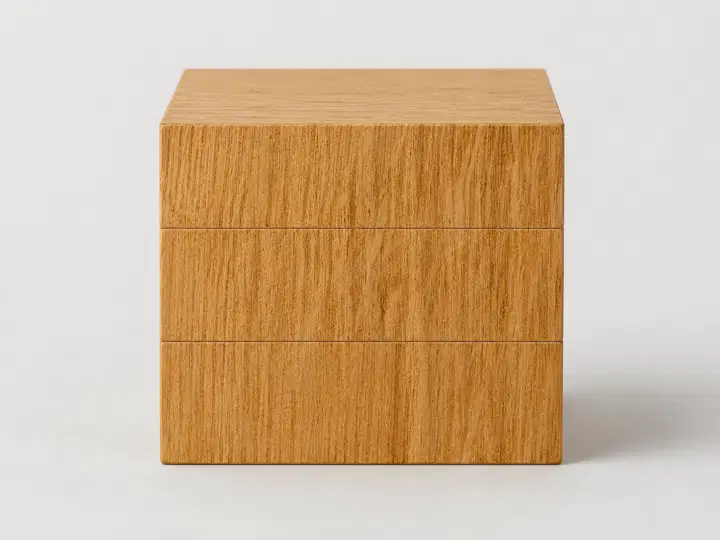
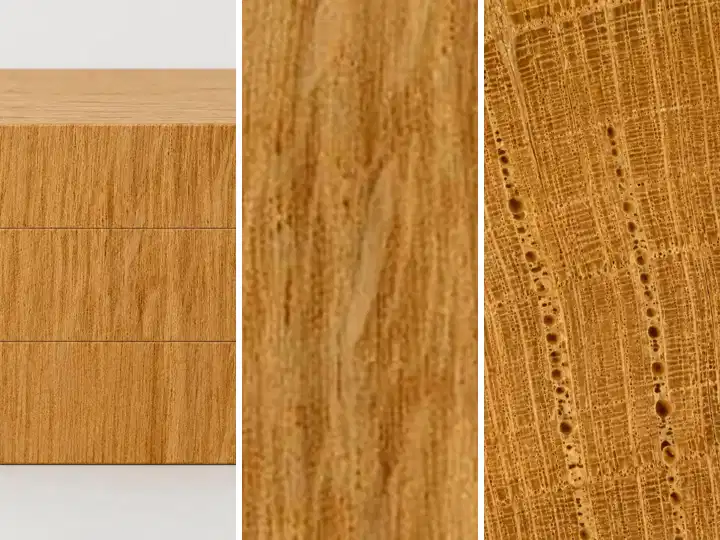
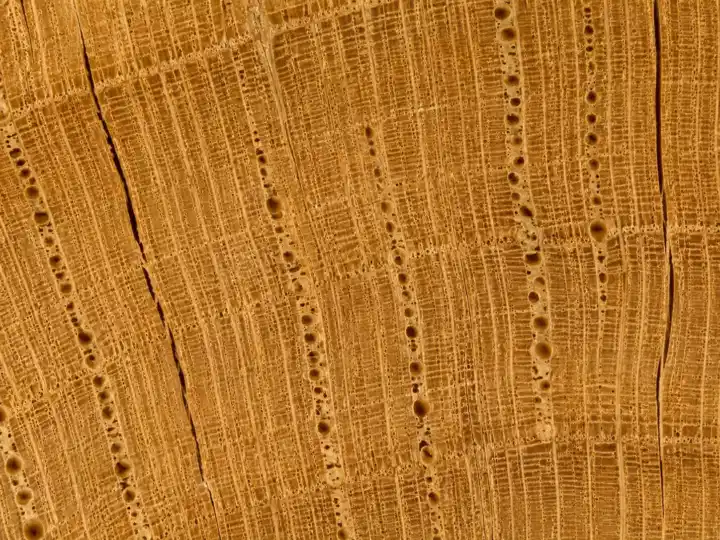
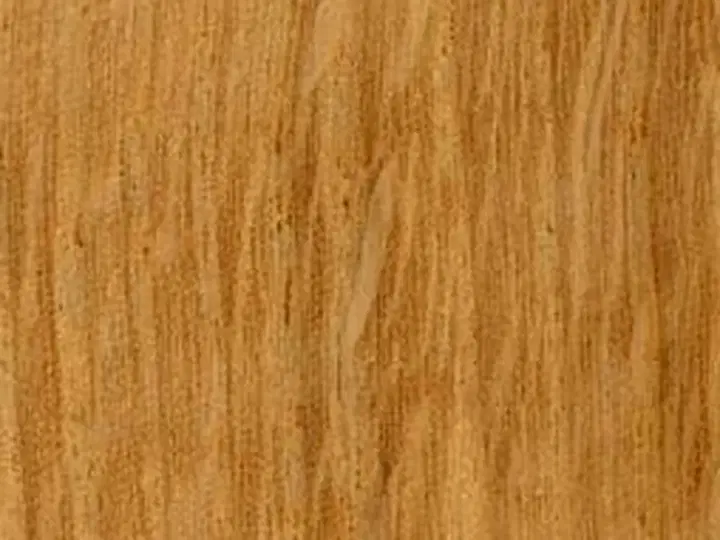
Heartwood is light to medium brown with an olive tint, varying noticeably from batch to batch. Sapwood is pale and not always sharply defined. The coarse, uneven grain and large medullary rays create a unique character – silvery streaks in radial sections, fine dots in tangential cuts. Under translucent stains, oak is the most expressive species in our range. Under opaque RAL paint, the appearance is identical to any other wood.
Availability & SM WOOD Execution
Key Details
Price depends on profile, dimensions, and finish – request a free quotation. For B2B projects we supply complete PHPP data (Uf, Uw, Ug, g‑value, psi‑spacer) on request.